
पेट एवं गुदा रोगों का सफल इलाज
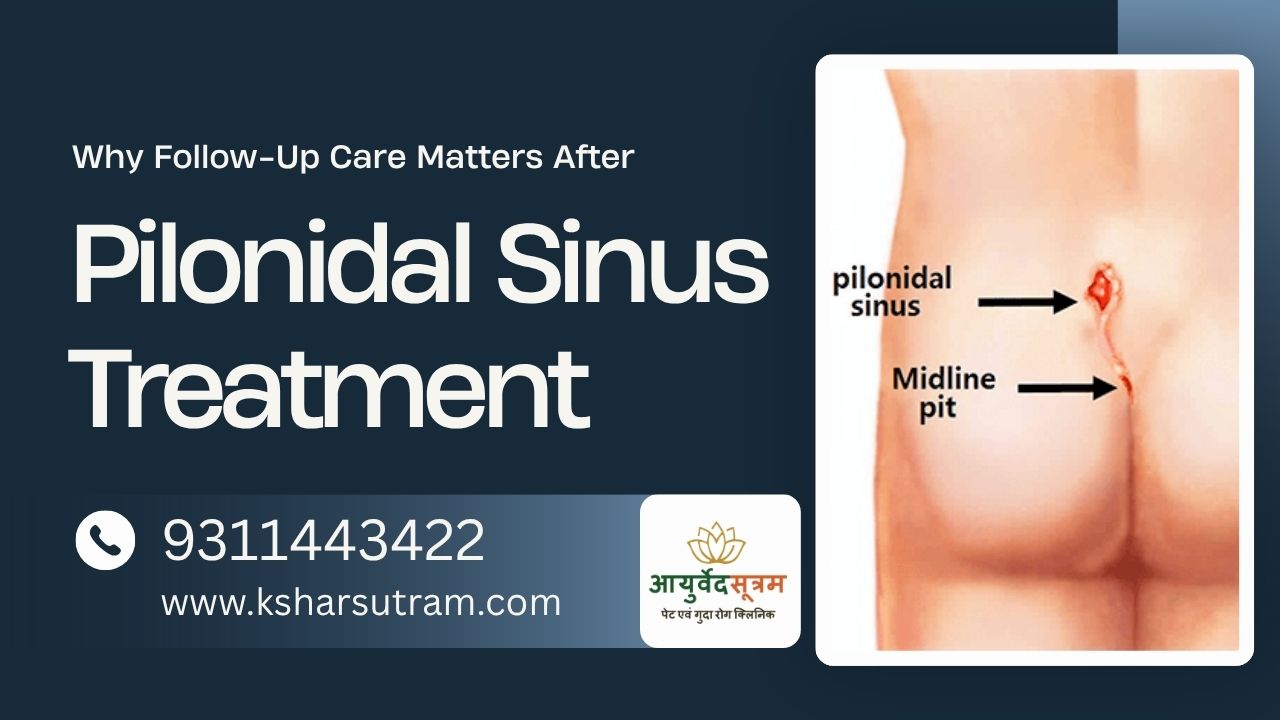
Pilonidal sinus is a frequently recurring condition that can come back even after treatment, such as surgery. However, Ayurvedic treatment for pilonidal sinus can prevent recurrence if you follow the doctor’s advice. Follow-up care plays a crucial role in managing pilonidal sinus, especially recurrence. It helps detect early signs of recurrence and start treatment.
KsharSutra therapy is the best treatment for pilonidal sinus. It supports natural healing and gives long-lasting results. However, following your doctor’s aftercare instructions can ensure a smoother recovery.
Monitoring the Healing Process
KsharSutra therapy involves multiple clinic visits. The medicated thread used in treatment needs to be replaced every week until the wound heals properly. During the follow-up appointments, your Ayurvedic doctor will check whether the wound is healing properly. Regular monitoring is important after procedures. If healing is slower than expected, the doctor will recommend appropriate measures to care for the wound.
Detecting Infection Early
Follow-up is part of the procedure. An infection can develop if bacteria enter the healing wound. You can detect infection only from the early signs, such as warmth, redness, swelling, and discharge. The infection may also develop intense pain accompanied by high fever. Starting pilonidal sinus treatment in Delhi at an early stage increases the chances of complete recovery and lowers recurrence.
Supporting Proper Wound Care
KsharSutra therapy involves multiple procedures at regular intervals until the wound heals. During procedures, the Ayurvedic doctor cleans the wound, changes the medicated thread, and recommends wound-care measures. During follow-up visits, you can ask practical questions that can help care for the wound. For example, if you need to sit for extended periods, your doctor can give tips to prevent infection.
Reducing Risk of Recurrence
Pilonidal sinus often returns even after successful surgeries. However, KsharSutra therapy can prevent recurrence to a large extent. Recurrence may be associated with unhygienic condition and carelessness. For example, hair accumulation, friction, moisture, or the formation of another sinus tract may trigger recurrence. The best pilonidal sinus doctor in Delhi recommends measures, such as maintaining good hygiene, keeping the cleft area clean and dry, and managing hair growth to prevent recurrence.
Knowing When to Resume Normal Activities
Recovery time varies depending on the severity of the wound, the patient's physical health, age, and lifestyle. Resuming your normal activities soon after the procedure, especially against the medical advice of your doctor, may irritate the wound and trigger recurrence. During follow-ups, the doctor can assess progress and recommend measures to boost recovery. It is especially important for people involved in desk jobs.
Addressing Ongoing Symptoms
Some patients experience mild discomfort or drainage for a period after the procedure. They can discuss these symptoms during follow-up appointments. In this way, follow-up becomes an opportunity to discuss whether the symptoms are part of the healing process. Persistent or worsening symptoms require immediate attention. They could be due to delayed healing, infection, or recurrence. Depending on the symptoms, the doctor may recommend further examination at the best pilonidal sinus clinic in Delhi.
Improving Long-Term Outcomes
After successful KsharSutra therapy, you can expect natural healing. Follow-up appointments will strengthen your belief in Ayurvedic therapy. Your doctor will ensure the wound heals properly. They will clean and dress the wound during follow-up treatments. If the doctor notices any sign of infection or recurrence, they will take immediate measures to manage the situation.
Conclusion
Follow-up care is an important part of pilonidal sinus treatment in Delhi NCR. Your doctor can examine and monitor the healing process during follow-up treatment. If you have questions about resuming normal activities or experiencing discomfort, you can discuss wound care during follow-ups.