
पेट एवं गुदा रोगों का सफल इलाज
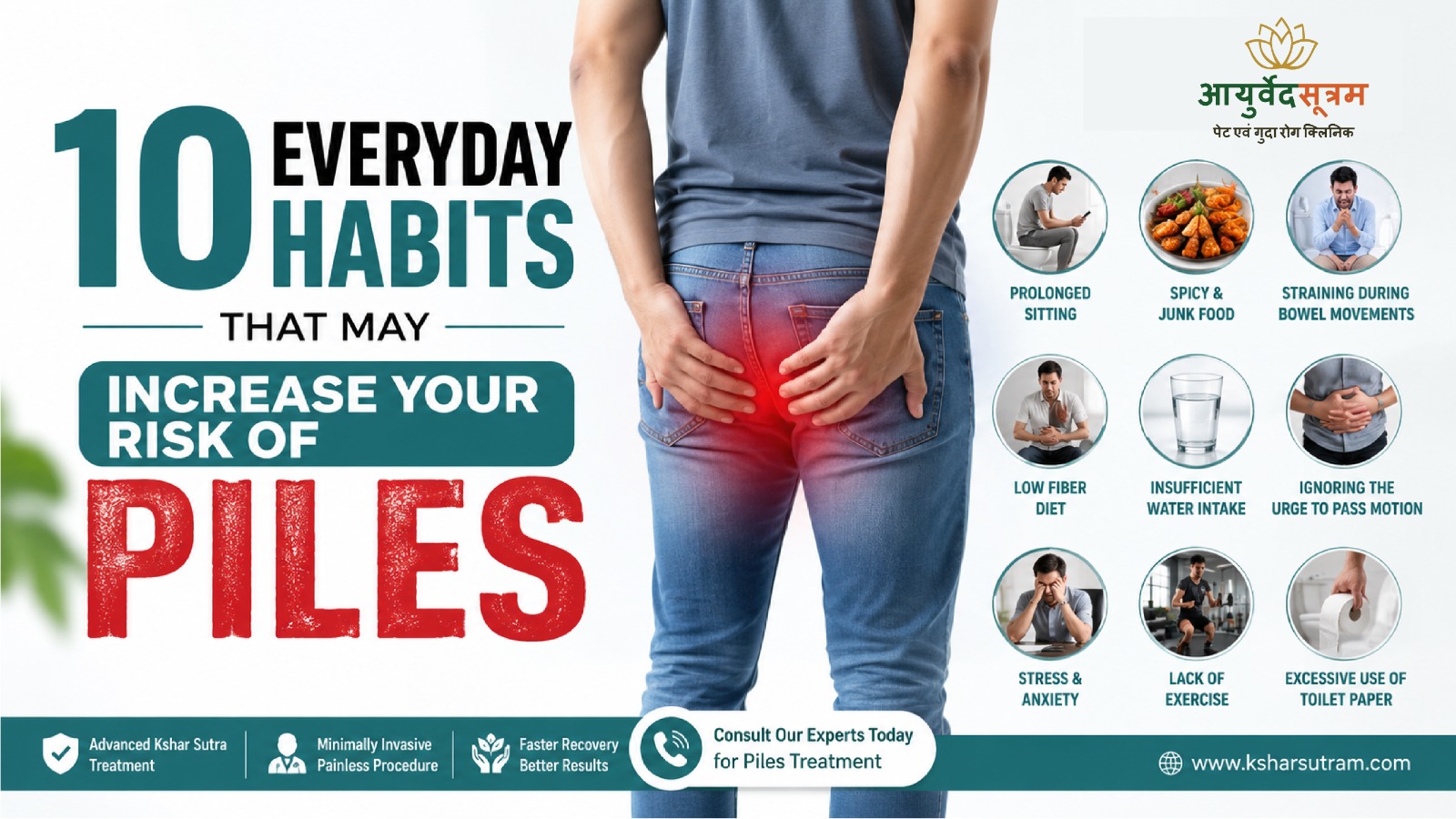
Traditionally, middle-aged and older adults aged 45-60 years have the highest risk of developing piles. However, a sedentary lifestyle and poor toilet and eating habits can lead to the development of piles at an early age. If you feel itching, swelling, or rectal bleeding, you should immediately visit the best piles doctor in Delhi NCR. Ignoring early signs can further aggravate the condition.
The following are the everyday habits that may increase your risk of piles
Fibre-rich foods help promote softer, more manageable stools that are easy to pass. However, a low-fibre diet does just the opposite. It makes the stool hard and difficult to pass. Fibre is found in fruits, vegetables, whole grains, beans, and nuts. Include these foods in your diet if you don’t.
A healthy adult needs at least 1.5 liters of water every day. Fluids support bowel movement. They help pass the stool with minimal pressure. Not drinking enough water can cause your stool to harden. If you don’t eat enough fibre, low water intake can accelerate the development of piles.
It means you don’t follow a consistent bathroom routine. Delaying bowel movements is proof that you don’t have a good bathroom habit. Delaying the passing of stool, even when you have an urge, can develop constipation. It is better to develop a habit of passing stool.
Eating a low-fibre diet and drinking little water can make your stool hard. You will need to squeeze your intestines to pass the hard pieces of stool. For this reason, piles treatment in Delhi includes softening the stool and improving bowel movement.
A toilet isn’t for checking messages or consuming online content. Sitting on a toilet seat for extended periods puts unnecessary pressure around the anal area. It may lead to piles. Discontinue this habit if you do.
If you do a desk job that requires sitting in one place for extended periods, you need to be careful. It may lead to piles. While sitting may be a part of your job, you can take short movement breaks for your health.
It is necessary to do physical activity to stay fit. For example, you can park your car at a distance from your office and take a short walk. Similarly, you can take the stairs instead of the elevator or escalator.
Whether you weight for body building or it is part of your work, you need to follow proper technique. Using inappropriate technique and unnecessary straining may lead to the development of piles.
Your cheat food may satisfy your taste buds, but it can create trouble for your gut. It is especially true if you follow a low-fibre diet. A cheat meal can harden your stool and make you sit in the toilet for a long time.
Both these problems lead to the development of piles. If you are suffering from any of these problems, visit the best piles clinic in Delhi today. The bowel needs straining during constipation, while frequent loose stools can irritate the area.
A fibre-rich diet, drinking enough water, regular exercise, and good bathroom habits can help prevent piles even in advanced age. If you notice symptoms of piles, visit the best piles clinic in Delhi NCR for a detailed check-up and treatment advice.